The Decisions That Seem Small Today but Cost a Fortune Tomorrow
How early choices in building software quietly turn into expensive constraints later — and what smart teams do differently.
By Gagan Kumar Sharma
• 12 min read
How early choices in building software quietly turn into expensive constraints later — and what smart teams do differently.
By Gagan Kumar Sharma

Every successful software product starts small. A few people sit around a table. They sketch out the main features. They decide how information will be stored. They build the first screens and start showing the product to early users. At this stage everything feels flexible. There are only a handful of customers. The amount of data is tiny. Nobody is thinking about serving hundreds of companies or handling millions of records. And that is completely normal. At the beginning, speed matters more than perfection. The team needs to learn what customers actually want and prove the idea works.
So people make quick, reasonable choices:
None of these decisions sound wrong. Most of them are sensible at the time.
Then the product succeeds.
More customers arrive. The data grows. A mobile app is launched. Other systems start connecting to it. New markets open. Suddenly the software is no longer the small system it used to be. The choices that once felt temporary have quietly become part of the foundation.
That is when teams discover an uncomfortable truth: some decisions become more expensive every time the system grows.

"Later" is one of the most common words in early product development — and one of the most dangerous when used carelessly.
Postponing a decision is not always bad. Sometimes it is the smartest thing you can do. The real risk is assuming that every decision will stay easy to change.
Picture a team building software for a single customer. They design everything around that one organization. A year later the business turns into a platform that needs to serve dozens or hundreds of organizations.
From the business side the request sounds simple: "Make it work for multiple customers."
From the system side it can feel like rebuilding the foundation of a house while people are still living in it. Every piece of information now needs a clear owner. Permissions have to respect company boundaries. Reports must stay private. Background processes need to know which customer they belong to. Storage, notifications, and history all need the same separation.
What was almost invisible in the first few weeks can suddenly touch nearly every part of the product. The original decision was not necessarily wrong. The cost of changing it simply grew much larger as the product succeeded.
Early on, deciding how to store information feels like a technical detail. Create the necessary records, connect them in a sensible way, and move on.
But data has a much longer life than most of the screens or features built around it. Features get rebuilt. Teams change. New tools appear. The data stays.
When the product is small, many reasonable structures can work. Once there are millions of records, historical reports, customer exports, compliance needs, and multiple teams relying on the same information, changing the structure becomes a business project — not just a technical one.
Questions appear that never existed before:
A decision that once felt purely technical has become a business risk. Experienced teams therefore do not only ask "Does this work today?" They also ask "How might this information need to grow or change?"
You do not need to predict every future requirement. You simply need to notice which relationships are fundamental to the business and protect those.
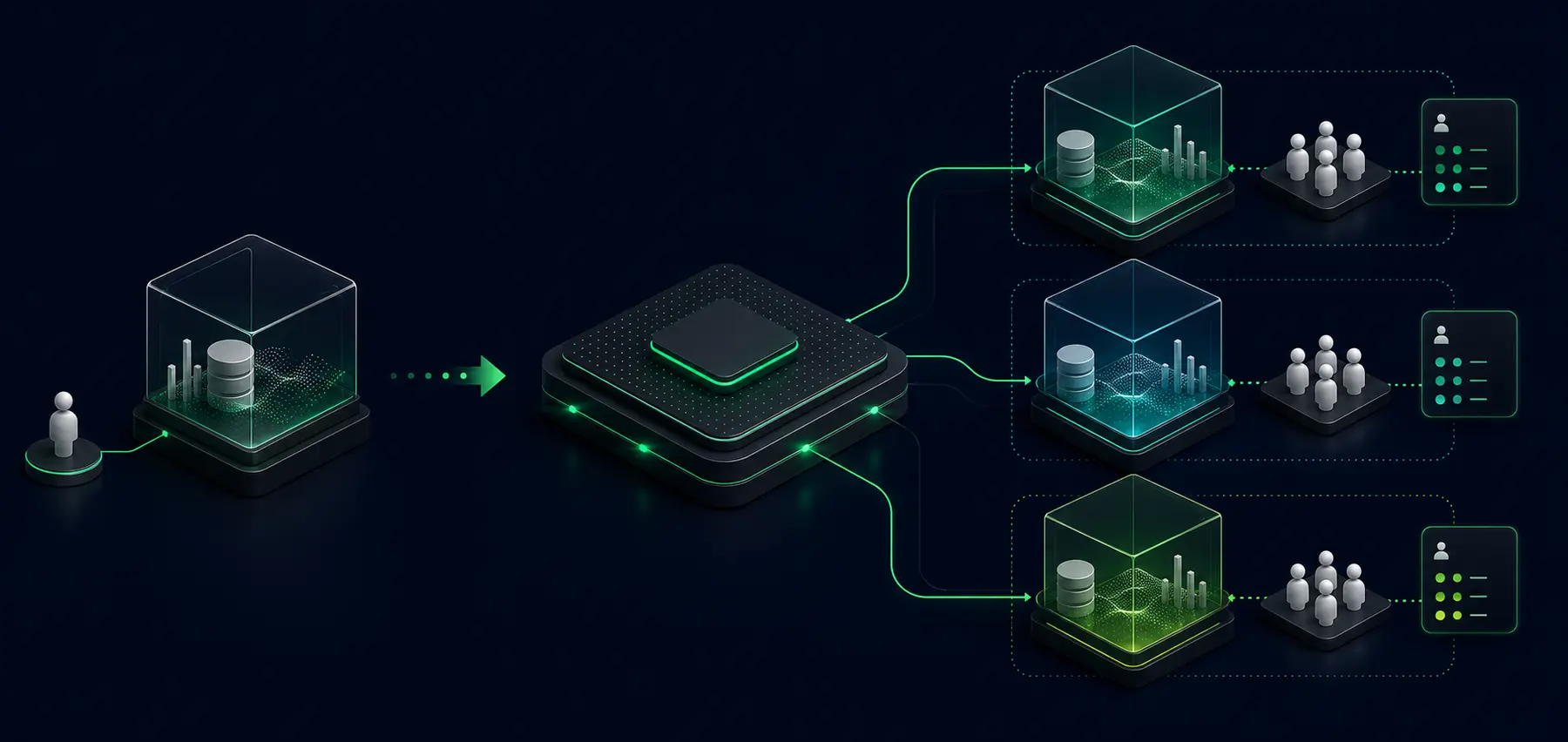
One of the clearest turning points is when a product built for a single organization starts serving many.
Suddenly a simple question becomes important: Who owns this information?
A person might belong to one company today and several tomorrow. Permissions that were global may need to be different for each organization. Reports that once covered everything must now be limited. Shared temporary storage that was once harmless can accidentally mix data between customers.
Separating customers cleanly is not a single feature. It becomes a boundary that runs through the entire system. Those boundaries are far easier to set early than to retrofit later when everything already depends on the original assumptions.
At the beginning, the way the software talks to other systems is often treated as an internal detail. The web application uses it. If something needs adjusting, the same team updates both sides. No big deal.
Then a mobile app launches. Another internal tool starts using the same connection. A customer integrates their own systems. A partner begins relying on it.
What used to be an internal detail has become a promise to other people and other companies.
Changing a simple field name can now require updates on phones that customers have already installed, systems maintained by other teams, and integrations that the company does not control. The change itself may be small. Coordinating everyone who depends on it is not.
Once other systems rely on a connection, it stops being just a technical interface and becomes a product commitment. Commitments are expensive to break.
Many teams judge a process by how fast it feels today. A report that finishes in two seconds looks fine. Six months later the company has ten times the data and the same report takes twenty seconds. Later it takes minutes and users start seeing failures.
No one introduced a bug. The system simply grew.
Performance problems are often growth problems. A process that is perfectly reasonable at one size can become completely unsuitable at another. At some point the work may need to happen in the background so the user is not left waiting.
The useful question is not "Is this slow right now?" It is "Is this operation likely to grow with the business?"
That single shift in thinking prevents many future production headaches.
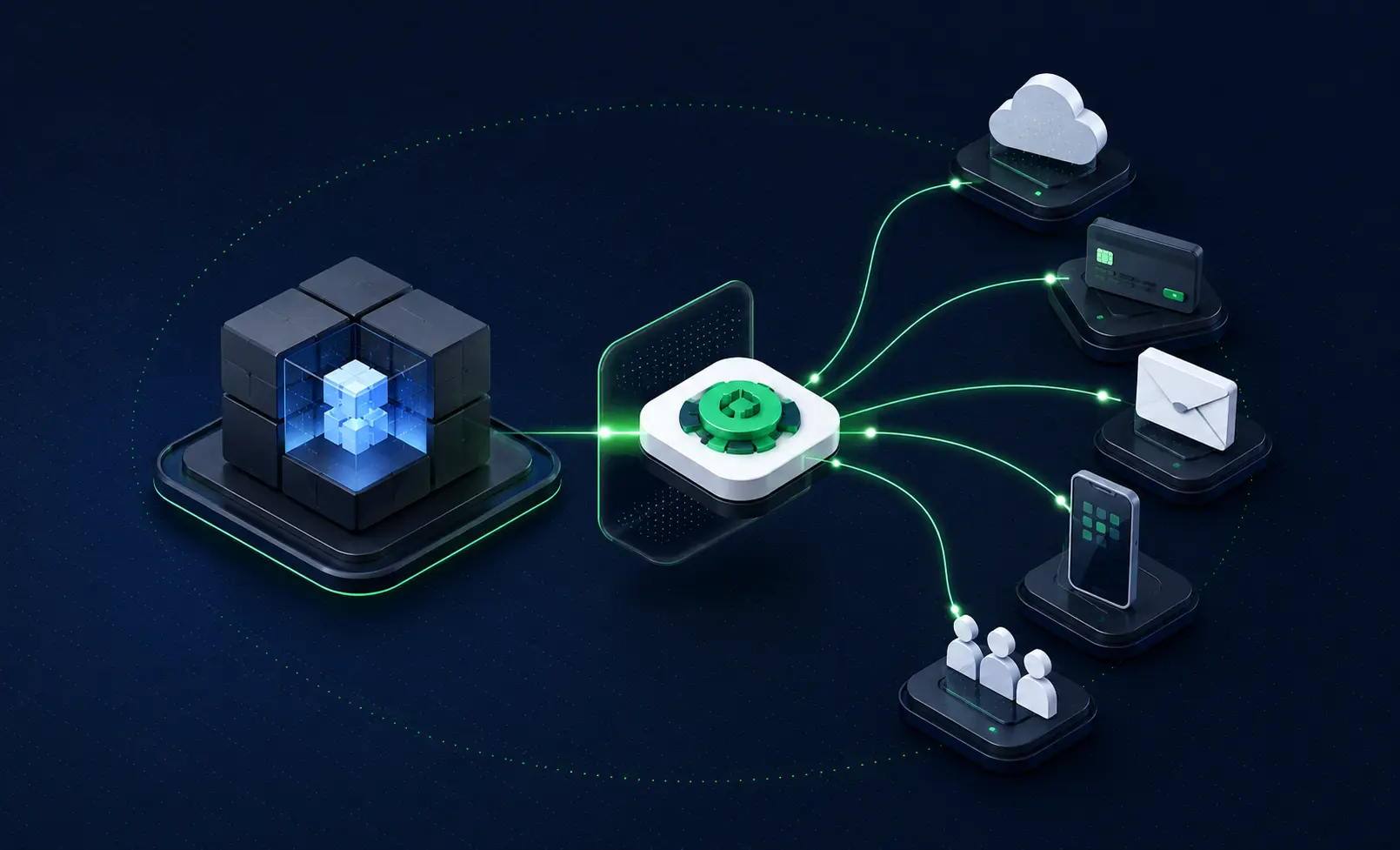
Modern software relies on many outside providers — payments, email, storage, authentication, analytics, and more. The first integration is usually straightforward. The feature works and everyone moves on.
The risk appears when that outside service becomes deeply woven into the way the business operates. Years later the provider changes pricing, updates its system, or becomes unreliable. Suddenly the team discovers the external service is no longer a simple connection — it is part of the product's foundation.
Creating a clear separation between the company's own logic and the details of any single provider makes future changes far less painful. The goal is not layers of unnecessary complexity. It is simply making sure the core business rules do not depend on every detail of an outside tool.
There is one decision that is easy to postpone because it does not create a visible feature: the ability to see what is happening inside the system.
When everything works, detailed visibility can feel optional. Then a customer reports that something was slow or failed. The team checks the obvious places and finds nothing clear. Without good visibility they are left guessing.
Proper visibility — often called observability — does not prevent every problem. It makes problems understandable. In a live system, understanding a failure quickly is often as valuable as preventing it in the first place. The longer a product runs without this capability, the more expensive and disruptive it becomes to add later.

At some point, teams often ask, "Why didn't we design this differently from the start?"
That is usually the wrong question. A better one is: "Was the original decision reasonable given what we knew at the time?"
Often it was. A choice made for a hundred users should not be judged by the standards of a million users. The real problem is failing to notice when an old decision has stopped fitting the current reality.
Good systems evolve as their constraints evolve. The structure that worked for the first version may not be right for the fifth. That is normal. The goal is not to eliminate change. The goal is to keep change manageable.
Seeing how expensive some changes become can push teams in the opposite direction — designing for every possible future scenario from day one. Dozens of separate services, complex infrastructure, and advanced patterns appear before the product has even found its customers.
That is not preparation. That is over-engineering. Every extra piece adds maintenance, cost, and ways things can go wrong.
The balanced approach is to identify the decisions that will be expensive to reverse and give those the attention they deserve, while keeping everything else as simple as possible. You can start simple and still leave room to grow. You can avoid unnecessary complexity without ignoring the future.
The biggest difference between simply making something work and designing a system that can last is the time horizon.
When building a feature, the question is often "How do I make this work today?"
When thinking about the larger structure, the question becomes "How will this behave when the business changes?"
Experienced teams do not claim to know the future. They think in change scenarios:
These questions do not mean every possibility must be built immediately. They simply highlight the decisions where being wrong would carry a high cost.
A practical question that improves almost any important discussion is this:
"If we discover six months from now that this decision was wrong, what would we have to change?"
Think beyond the code. Would data need to be migrated? Would existing connections break? Would customers or partners need to update their systems? Would reports and history become difficult to interpret? Would security rules need redesigning?
If the answer is "yes" to several of those, the decision deserves more deliberate attention — not because it must be perfect, but because the cost of changing it later is high.
Software rarely becomes difficult because of one bad line of code. It becomes difficult when yesterday's simple decisions turn into tomorrow's constraints.
The most important lesson is not "Always design for massive scale." It is this: understand which decisions become expensive once other parts of the system — and the business — depend on them.
All of these share one characteristic: they become harder to change as dependencies accumulate.
A decision becomes expensive when many parts of the product, the data, the customers, or other systems depend on it. The difficulty usually comes from the web of dependencies, not from the original choice itself.
No. Trying to prepare for every possible future creates unnecessary complexity and cost. The better approach is to notice realistic growth paths and pay special attention to the decisions that would be painful or risky to reverse.
No. Sometimes a simpler path is chosen deliberately because the business needs speed or the future requirement is still unclear. The problem arises when the debt is ignored indefinitely or when teams lose track of its growing cost.
Not at all. A well-organized simple system can be an excellent foundation. The risk is not simplicity. The risk is unclear boundaries or assumptions that cannot evolve when the business changes.
Before major decisions that will affect data, security, connections to other systems, or multiple teams — and then revisited as the product and the business evolve. It does not need to be a heavy formal process for every small feature. It does need deliberate attention for the decisions that carry lasting consequences.
Every successful software product changes. The number of users changes. The volume of data changes. The business itself changes. The original assumptions that shaped the first version eventually stop fitting.
That is why the structure of a system should never be treated as finished after the first design. The goal is not a perfect architecture that never needs to change. That does not exist.
The goal is to recognize which decisions are easy to reverse and which ones can become deeply embedded. Sometimes "we'll fix it later" is the right call. Sometimes it quietly becomes "we should have thought about this earlier."
Good judgment lives between those two extremes.
Build what the business needs today. Understand what could become expensive tomorrow. And make those decisions on purpose.
Last updated: September 2026
Get expert guidance on implementing AI solutions that actually work. Our team will help you design, build, and deploy custom automation tailored to your business needs.

As businesses move toward fully cashless operations, ACH payments offer a low-cost, reliable backbone for transactions. This guide covers what ACH is, how it fits into a cashless strategy, compliance requirements, and how to evaluate whether ACH is right for your business.

AI API costs are predictable — once you know the levers. This guide covers every layer of the cost stack: prompt design, model tiering, caching, batching, RAG vs fine-tuning economics, and the monitoring infrastructure that keeps costs from compounding invisibly.

Before your med-tech startup writes a single line of code, you need a regulatory strategy. This guide covers FDA 510(k) clearance, SaMD classification, IEC 62304, design controls, risk management, and the documentation that makes or breaks a submission.